One of the most indented clusters of islands in the entire Mediterranean Sea
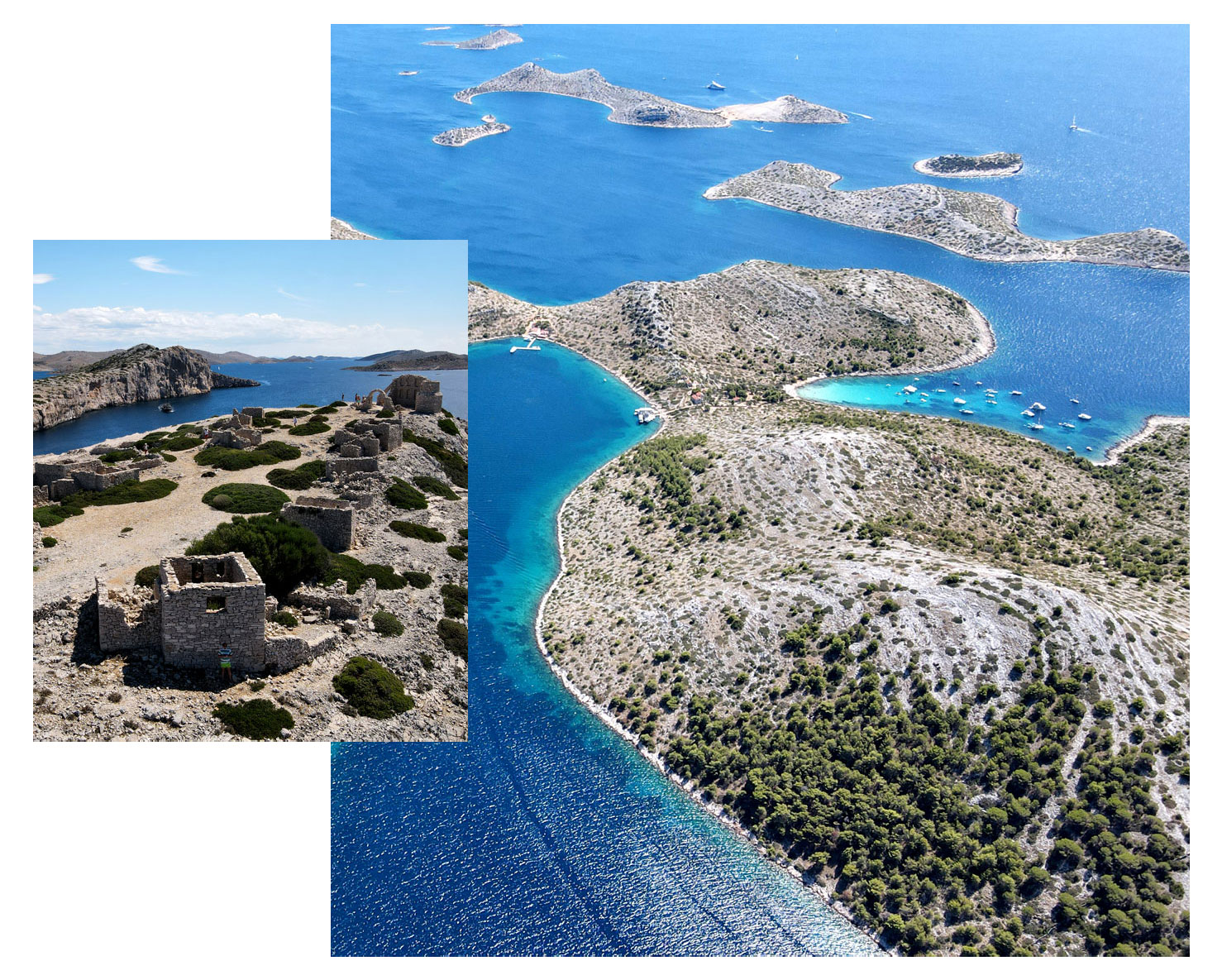
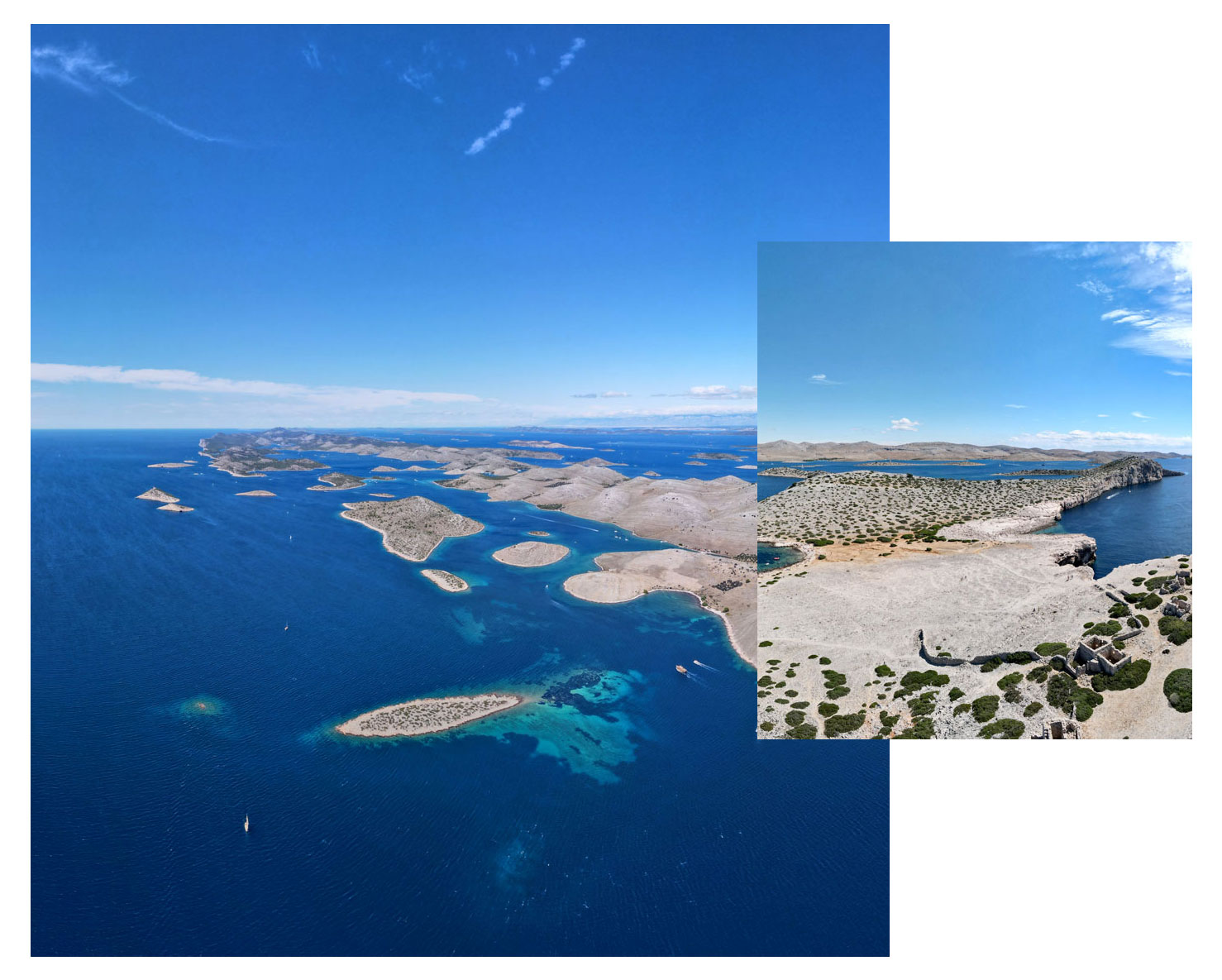
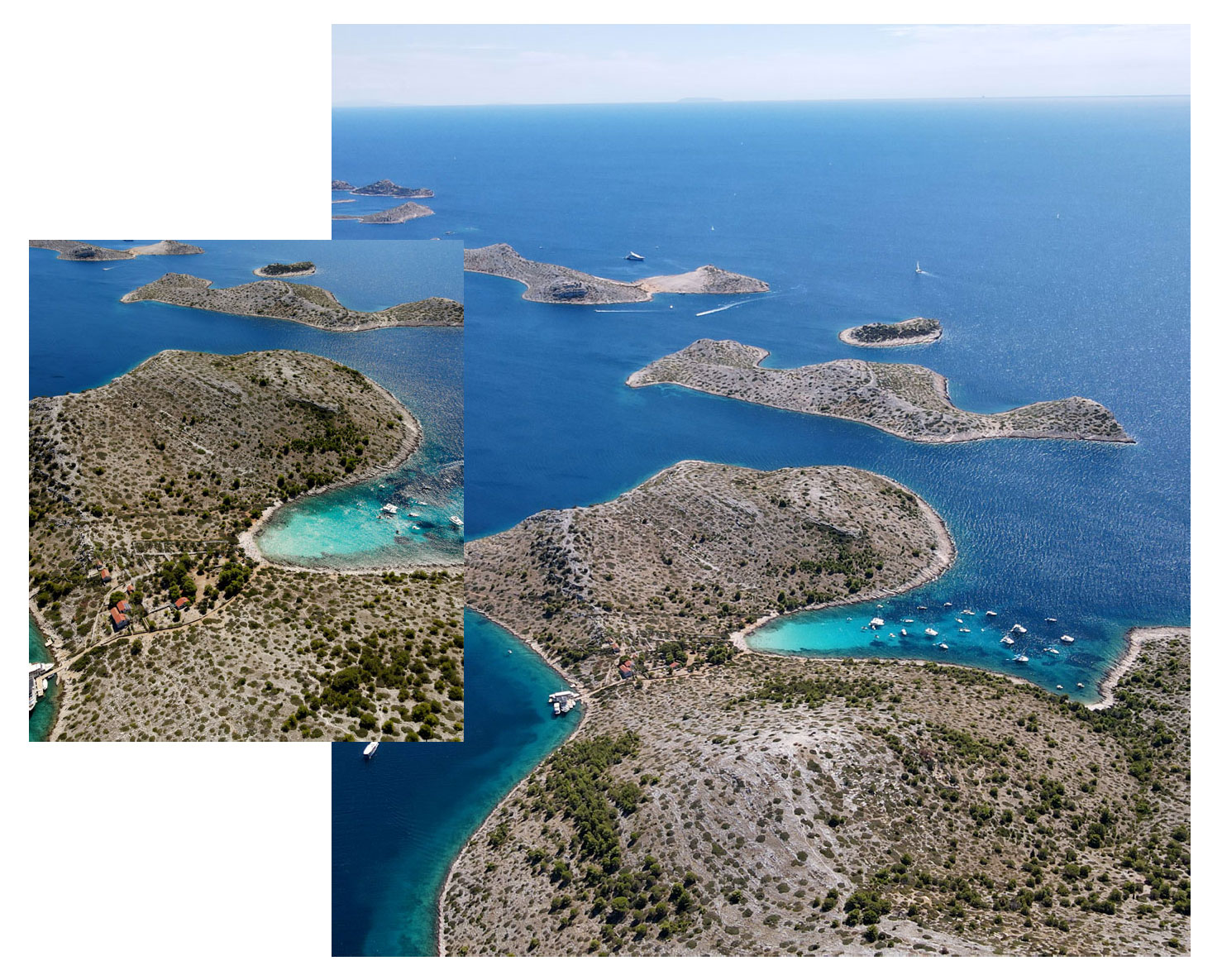
Kornati is a group of islands located in the Adriatic Sea in Croatia. The islands are part of the Kornati National Park, which was established in 1980 to protect the area's unique natural beauty. The park is made up of 89 islands, islets, and reefs, and covers an area of about 217 square kilometers.
The islands are characterized for their rocky terrain, clear waters, and diverse flora and fauna. The vertical cliffs of the "crown" of the Kornati islands facing the open sea are the most popular phenomenon of this park. The park abounds in remote bays and coves, as well as historical landmarks such as the pre-Romanesque church of St. Mark on the island of Sita. The islands have been inhabited for thousands of years, and there are several ancient ruins and archaeological sites on the Kornati Islands. Visitors are encouraged to follow the rules of sustainable tourism, such as respecting park opening hours and respecting local flora and fauna. Visitors to the park can explore the islands on foot, by boat or kayak, and enjoy activities such as swimming, diving and fishing. Despite its natural beauty and historical importance, the Kornati Islands have remained relatively untouched, allowing visitors to experience the natural and cultural heritage of the region in an almost untouched state. This is exactly why sustainable tourism is of great importance in this area in order to preserve nature.
Meld of nature and humans
Anthopogenic landscape - a stone pasture
One of the reasons for the protection of part of the Kornati Islands is the anthopogenic landscape - a stone pasture created by human activity, i.e. regular burning for grazing. Until the end of the 19th century, the largest part of Kornati was occupied by pastures, and at that time the main activity was animal husbandry (sheep and goats). Pastures were regularly set on fire to provide food for livestock. In the thirties of the 19th century, the inhabitants of Kornati were engaged in planting vines, but with the arrival of phylloxera on the Kornati islands, the population turned to olive growing. Olive growing was a lucrative business due to the favorable oil market, but also the relatively little attention that had to be paid to olives. It is estimated that today there are around 18,000 olive trees in the area of the Kornati National Park.
Due to its natural and cultural heritage, Kornati islands have been designated as national park and protected area and have an active sustainable tourism management strategy in place.
One of the most indented clusters of islands in the entire Mediterranean Sea
Special features of National Park Kornati
The Kornati National consists of over 140 islands, islets, rocks, and reefs that are known for their natural beauty.
Untouched natural beauty.
Today there are around 18000 olive trees in the area of the park.
The anthopogenic landscape - a stone pasture created by human activity, i.e. regular burning for grazing.